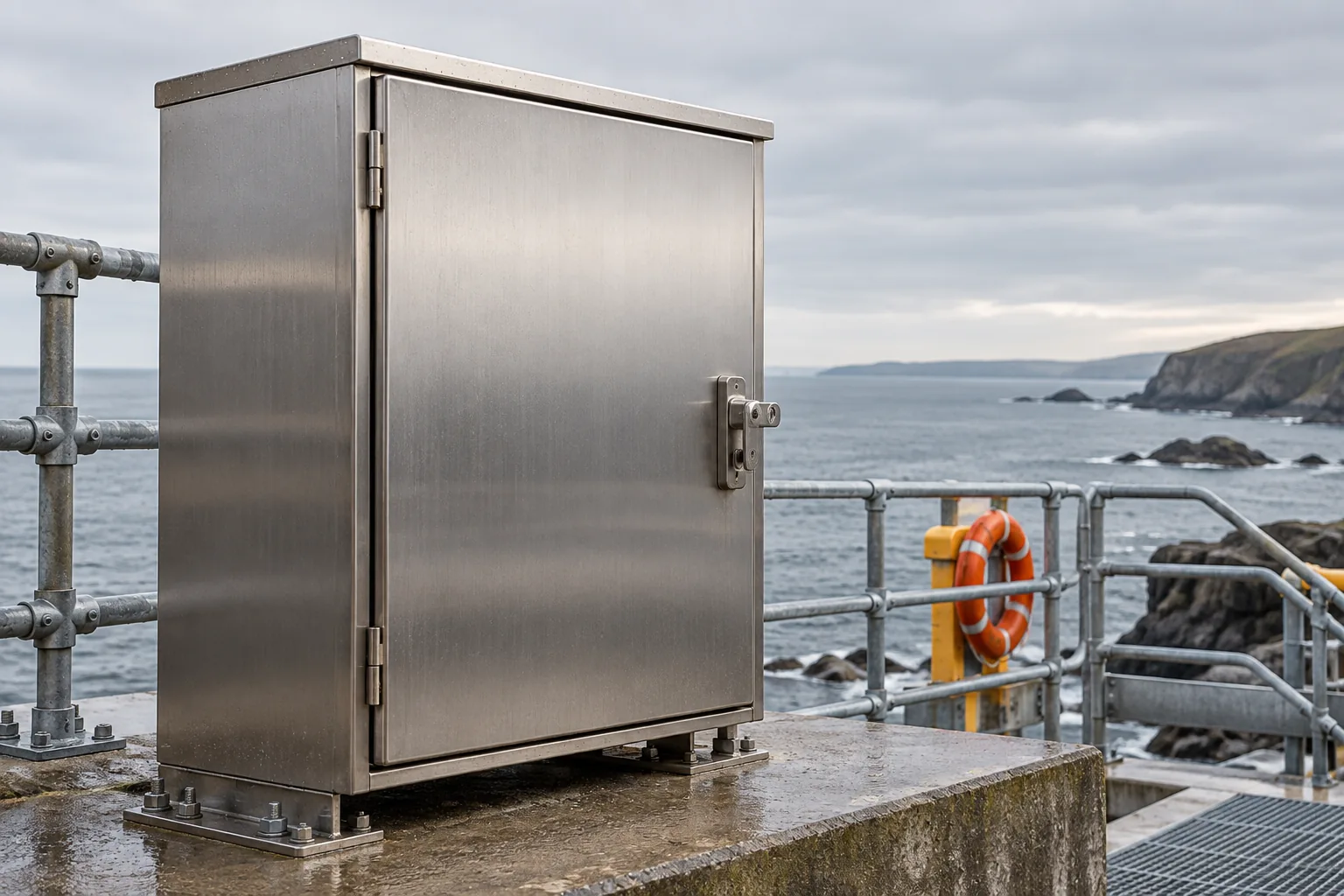
Start with the exposure
For relatively mild atmospheric conditions, 304 is a candidate worth assessing. The molybdenum-bearing 316 and 316L grades offer a step up in resistance to localized corrosion, but neither is a universal coastal solution. Strong salt exposure or aggressive process chemicals can require a higher-alloy material and a corrosion specialist’s assessment.
Look closely at sheltered locations
A canopy may reduce direct rain while allowing deposited salt to accumulate. Outokumpu’s atmospheric-corrosion guidance highlights rain-washing, surface cleanliness and finish alongside grade selection. Give the supplier a description of the actual cabinet location, its distance from salt sources and the planned cleaning regime.
Specify the whole construction
Name the alloy, surface finish, fabrication treatment and corrosion requirements for hinges and fasteners. Include the gasket’s chemical and temperature requirements. Request an enclosure rating for the complete door, entry and accessory arrangement; stainless steel alone establishes neither an IP code nor a NEMA Type.
Compare a defined package
Ask bidders to identify the supplied material and finish, provide the relevant material documentation and explain any alternative alloy. Have the project engineer agree suitability for the exposure before comparing the delivered cabinet prices.
Further reading & sources
General procurement guidance. Confirm project-specific requirements with the responsible design team and the supplier.
Use this on your project
Download the requirements and delivery templates or record a comparison against your specification.