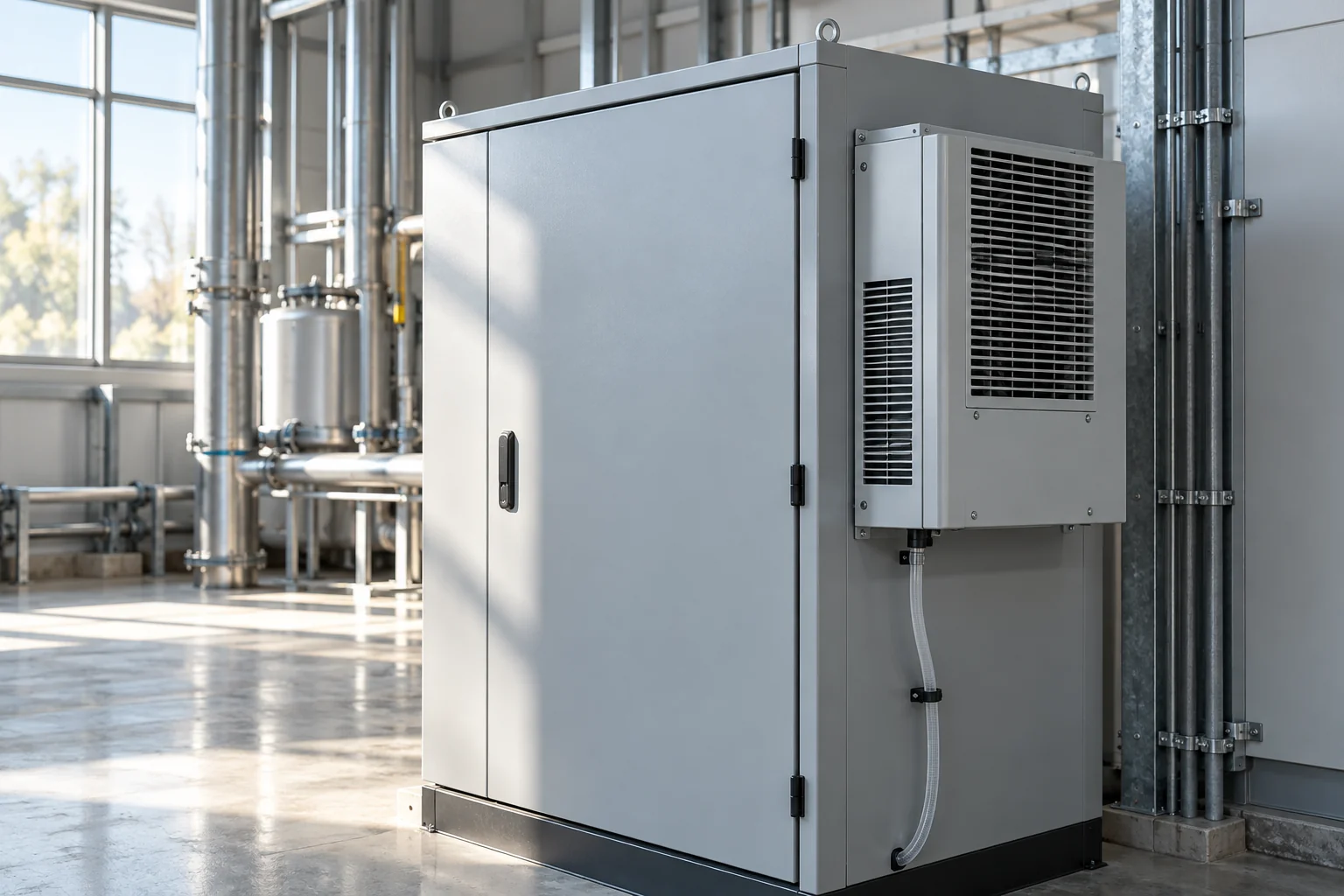
Build the thermal input sheet
Record equipment heat losses at the expected duty cycle, allowable component temperatures, minimum and maximum ambient conditions, enclosure dimensions, material, mounting and adjacent cabinets. For outdoor equipment include solar exposure, shading assumptions and operating hours. Distinguish measured values, equipment-supplier data and estimates.
Assess double-wall construction under solar exposure
A ventilated space between cabinet skins can reduce the solar heat reaching the equipment chamber. Rittal describes this approach in its CSP Zeebrugge case study. Model the proposed wall and roof arrangement with the equipment losses, ambient conditions and site exposure before selecting passive or powered cooling.
Size pressure compensation for the enclosure
BOPLA recommends a pressure-compensation element to address temperature-driven pressure fluctuations in sealed housings. Select the element and quantity using the manufacturer’s sizing method and mounting instructions. Include it in the final enclosure configuration and retain a separate assessment of humidity, shutdown conditions and condensation controls.
Ask for a calculation with assumptions
Rittal’s RiTherm offers thermal planning for enclosure configurations, including outdoor applications. Use a documented calculation or the supplier’s engineering service with the actual project inputs. Record the tool version, selected configuration, assumptions and result so another reviewer can reproduce the decision. A catalogue cooling-capacity headline alone is insufficient for selection.
Compare operating and maintenance needs
Ask the designer to justify ventilation, heat exchange or active cooling against the temperature limits and contamination exposure. Include power supply, airflow paths, clearance, noise, filter access, condensate arrangements, service access and fault indication in the enquiry. Where continuity is important, establish the agreed response to cooling failure.
Include shutdown and seasonal conditions
Review low-temperature periods, humidity changes and equipment shutdowns as well as the hottest operating day. Pfannenberg’s outdoor guidance discusses heating, thermostats and humidity controls as part of an enclosure thermal package. The appropriate arrangement still depends on the installation; do not transfer a product-family claim to an unevaluated cabinet.
Agree the handover evidence
Request the final thermal calculation, equipment schedule, setpoints, maintenance instructions and a commissioning record. Make responsibility for any changes to the layout or heat load explicit. Revisit the calculation when additional equipment is proposed.
Further reading & sources
Rittal RiTherm — thermal planning
Pfannenberg — outdoor thermal management
General procurement guidance. Confirm project-specific requirements with the responsible design team and the supplier.
Use this on your project
Download the requirements and delivery templates or record a comparison against your specification.